dustbreak
First Person Multiplayer Experience
The idea for this level was to create a FPS Multiplayer map that focuses on teamwork and map control. It was inspired by competitive Halo and Call of Duty.
Introduction
Standing inside a capture zone earns the respective team points. The zone moves to a new spot after a while, which is why control of the map is crucial. Defend the zone from the enemy to earn enough points to secure victory.
Objective
Solo project
6 weeks half time (4hours/day)
Created using Unreal Engine 5
Breakdown
FPS Game Template by Infima Games
External assets
gameplay trailer
Overview
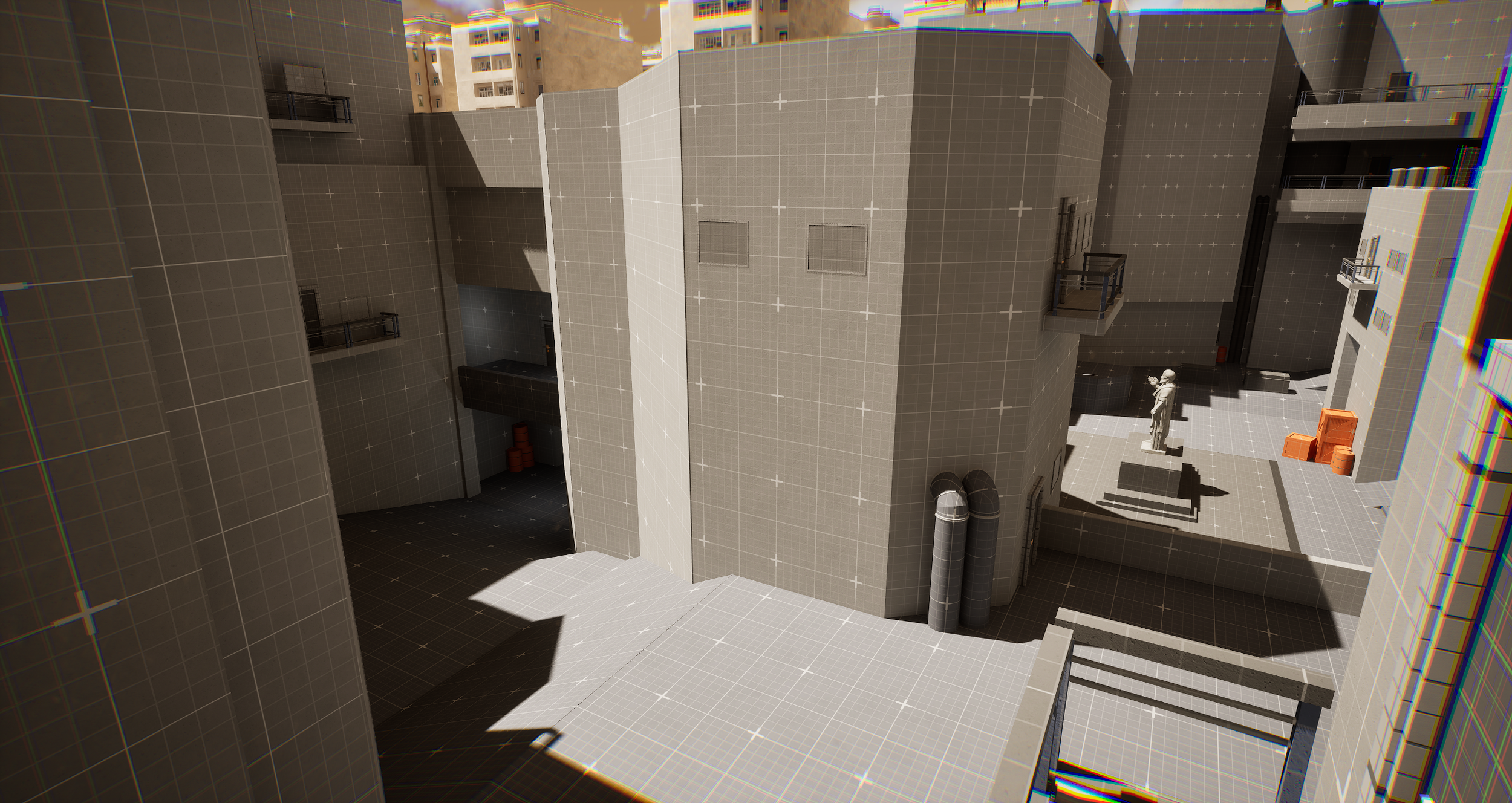
Ramps
B Streets
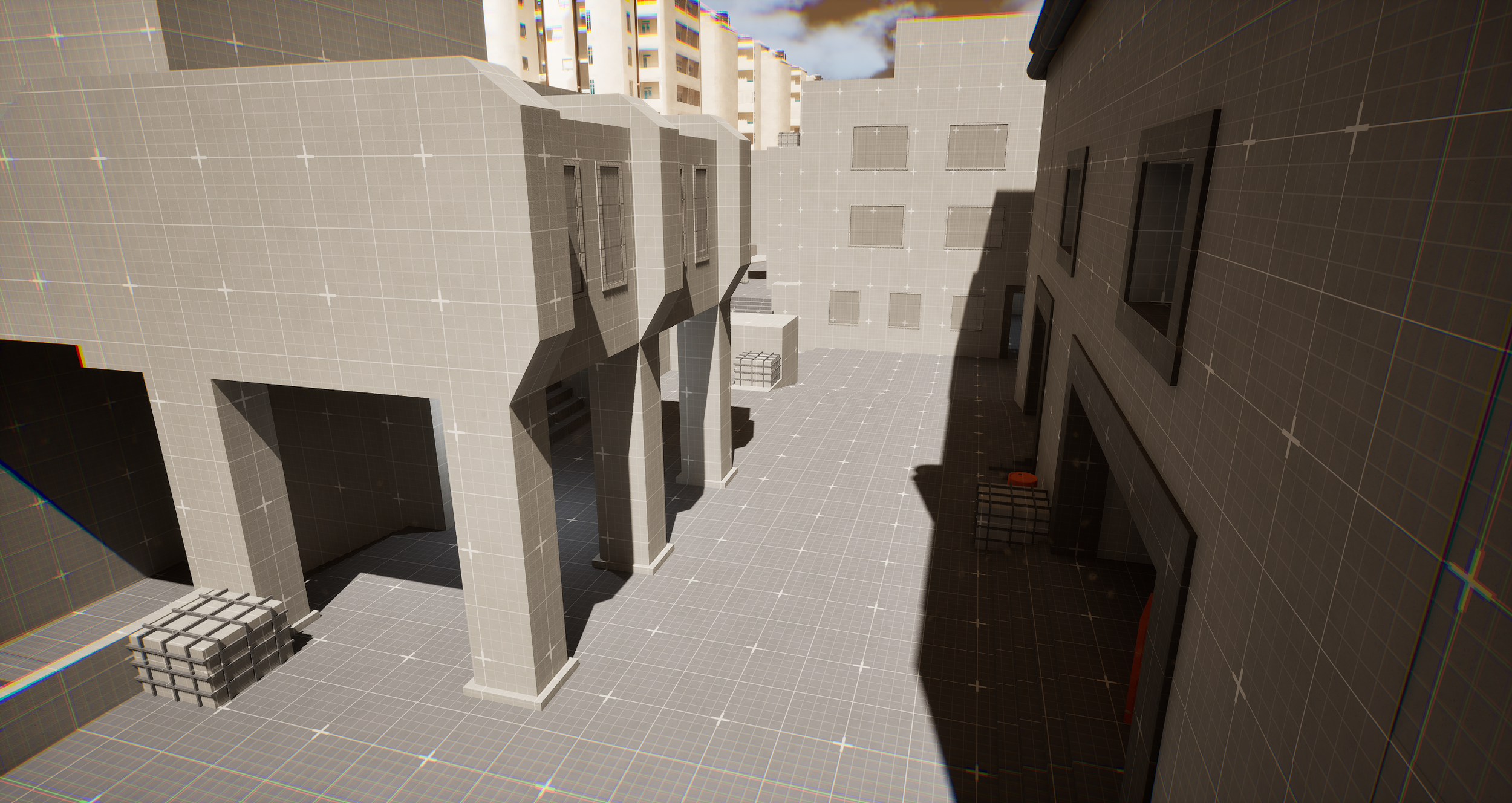
A Dome
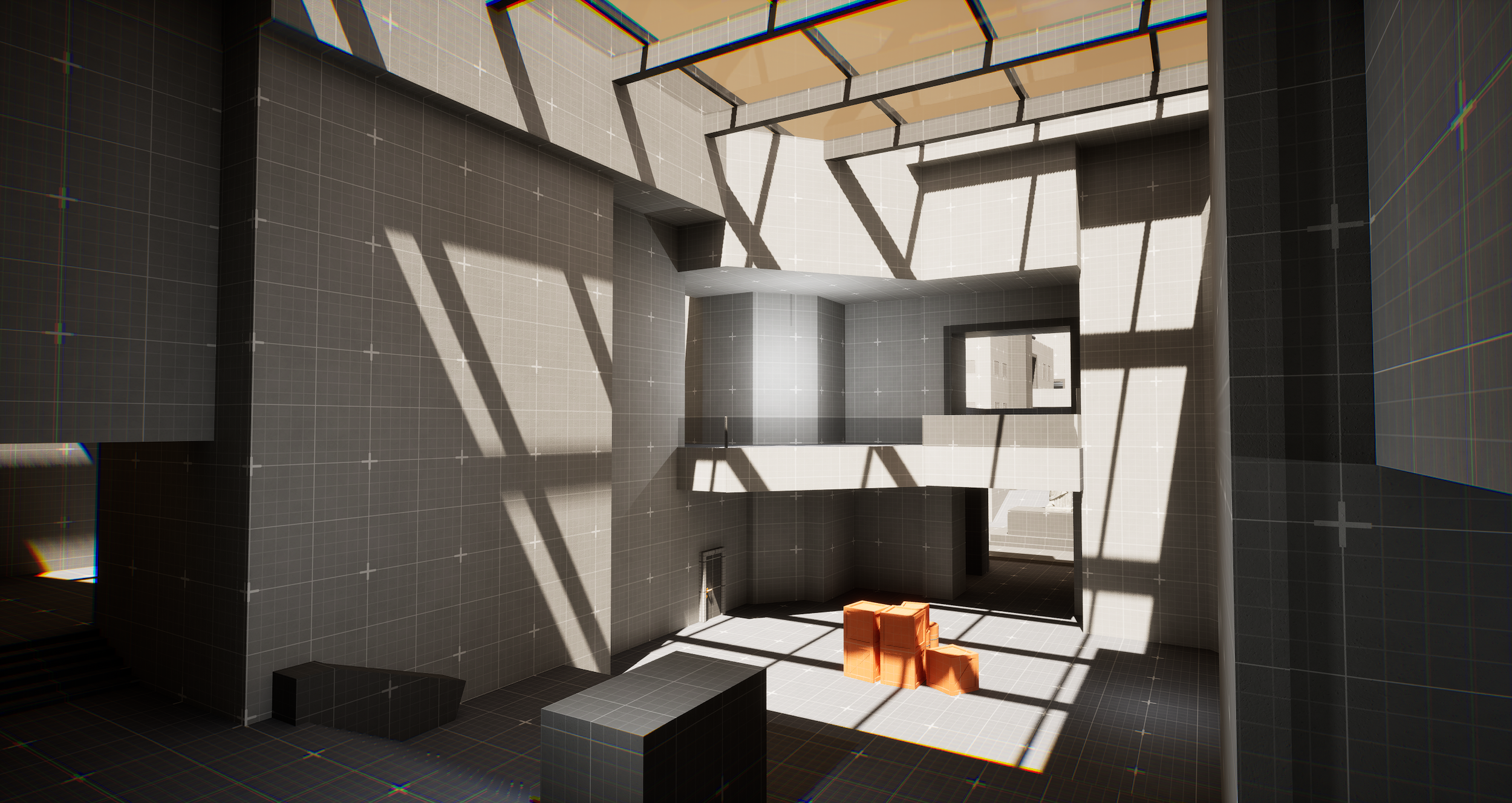
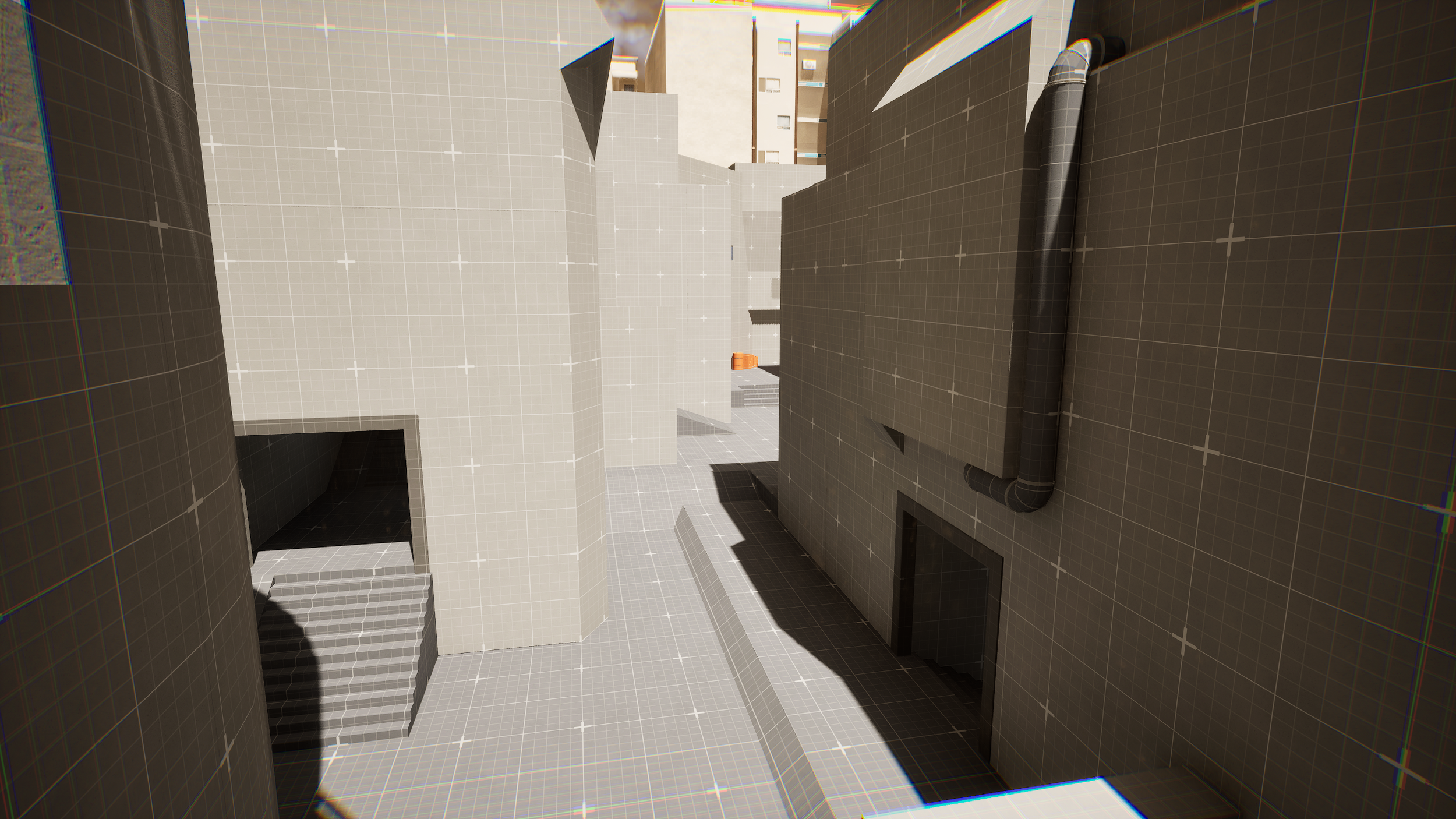
Alley
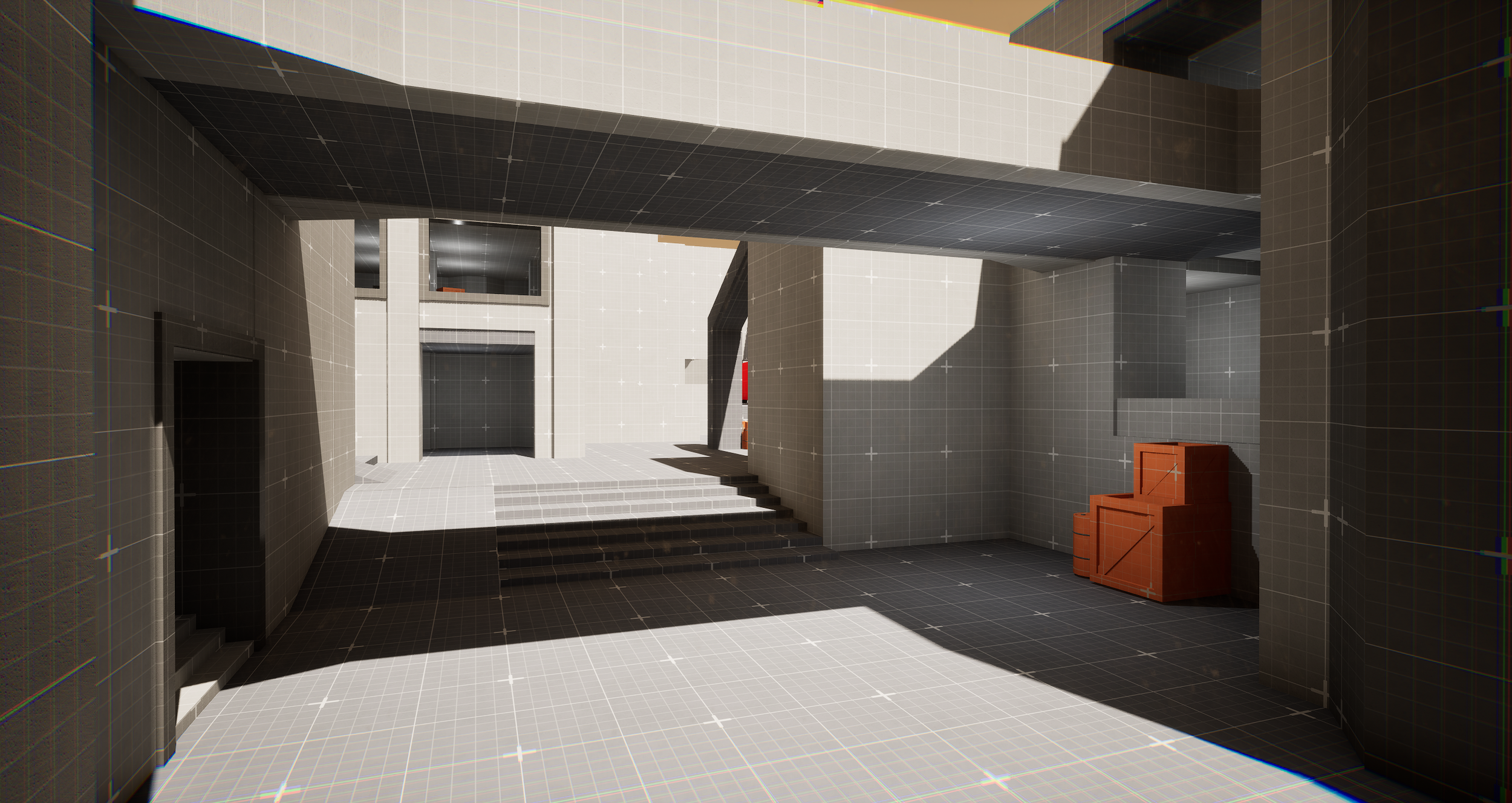
Yard
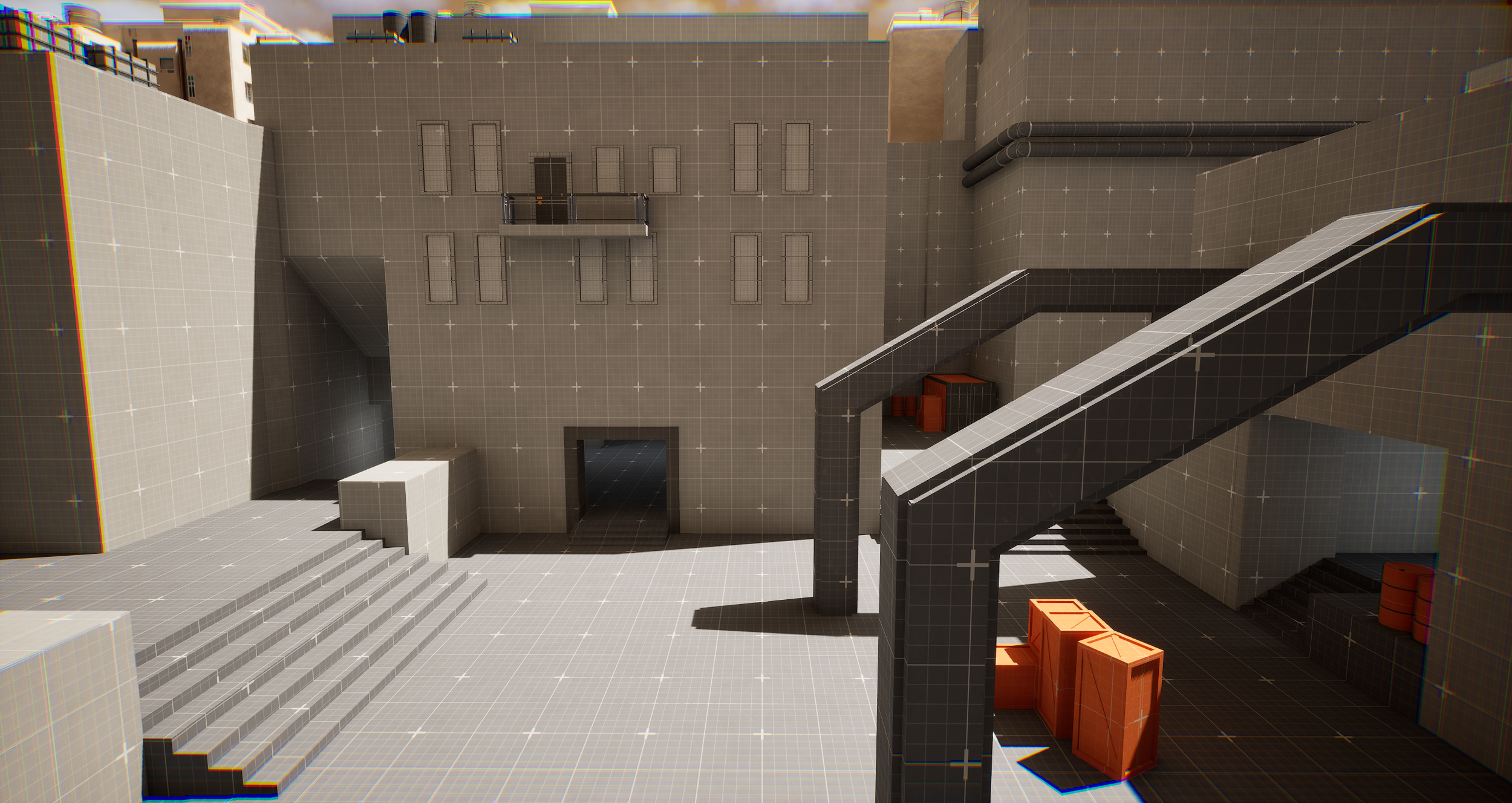
Mid
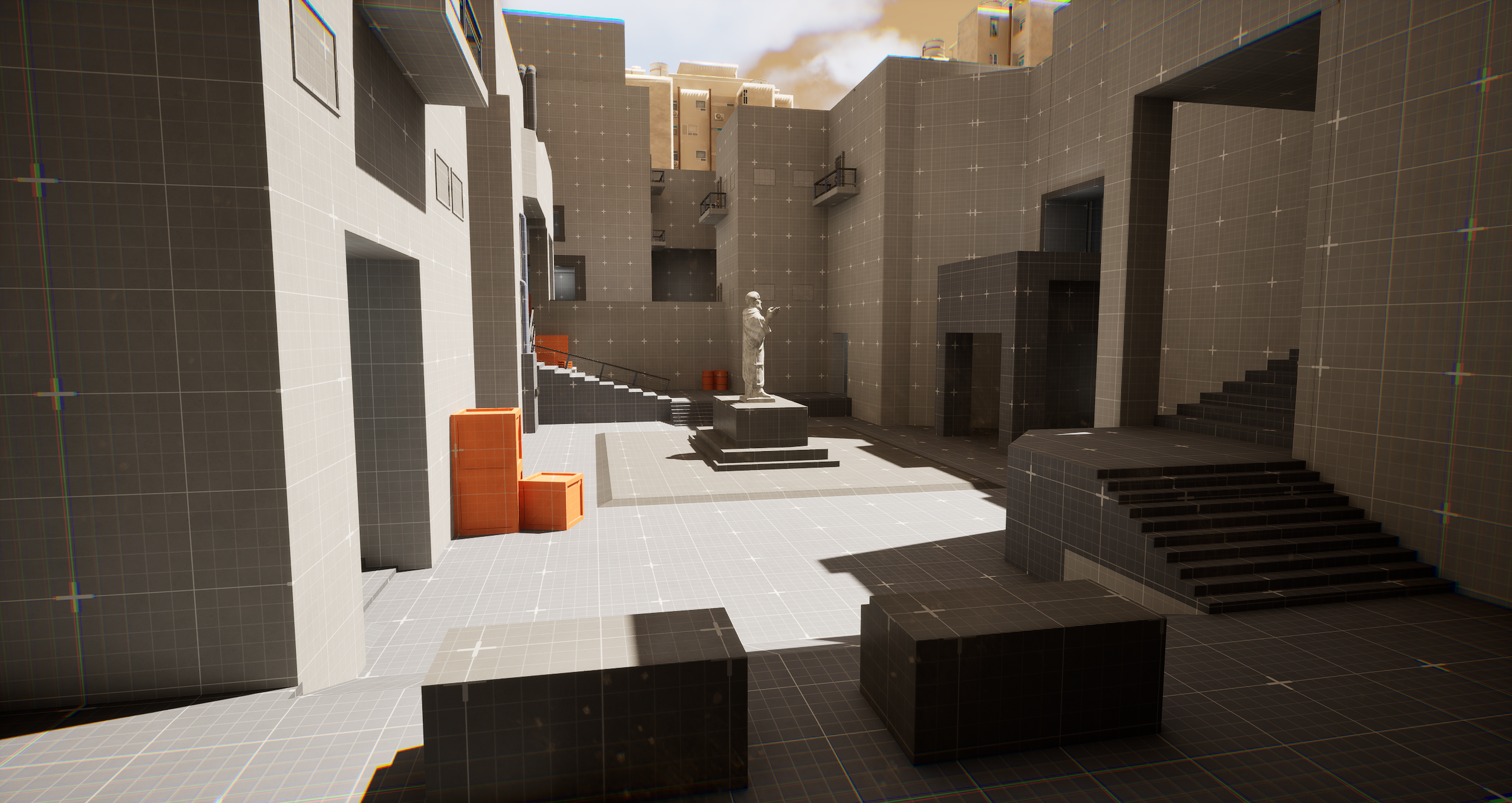
C Shops
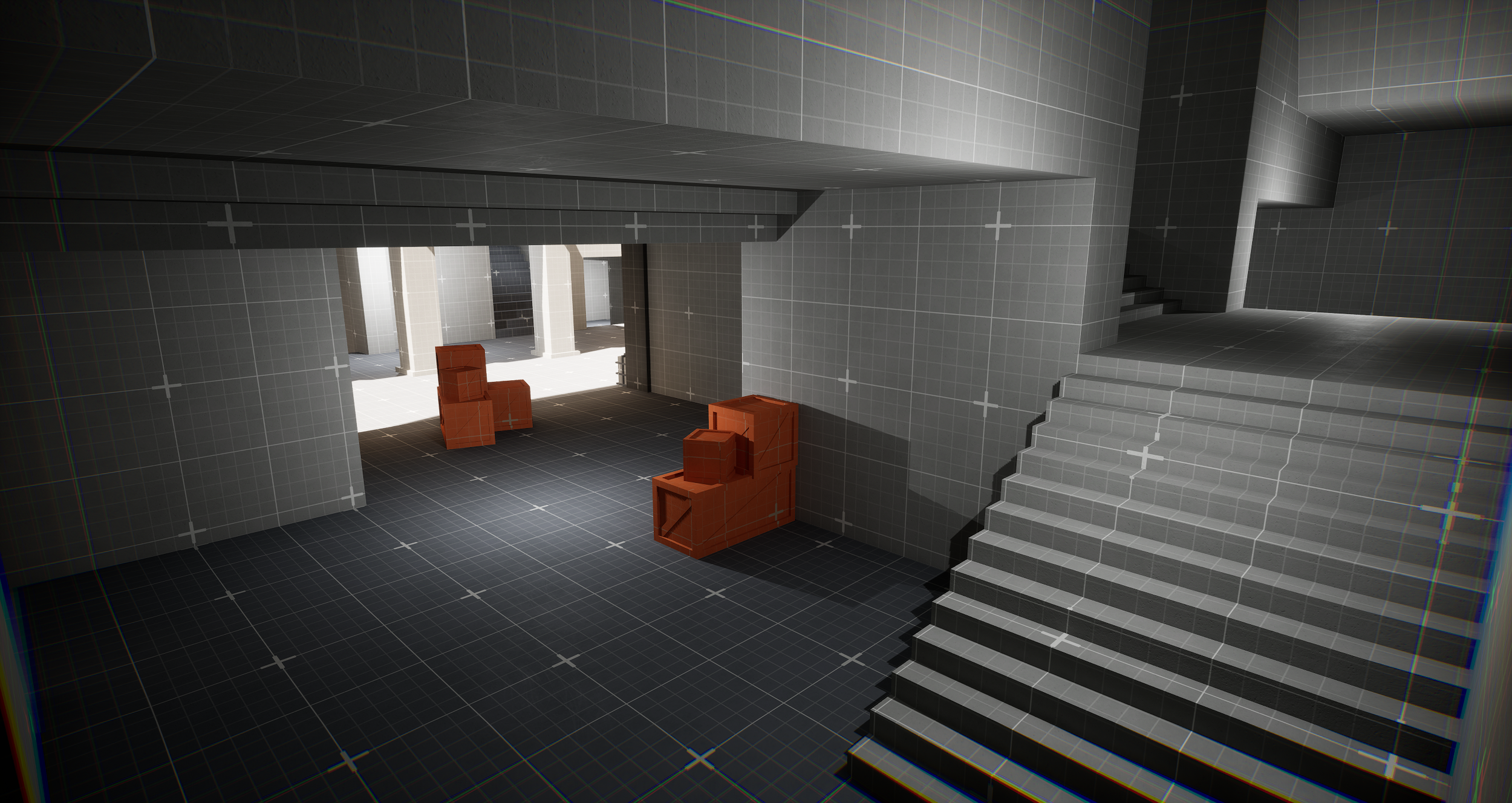
Blockade
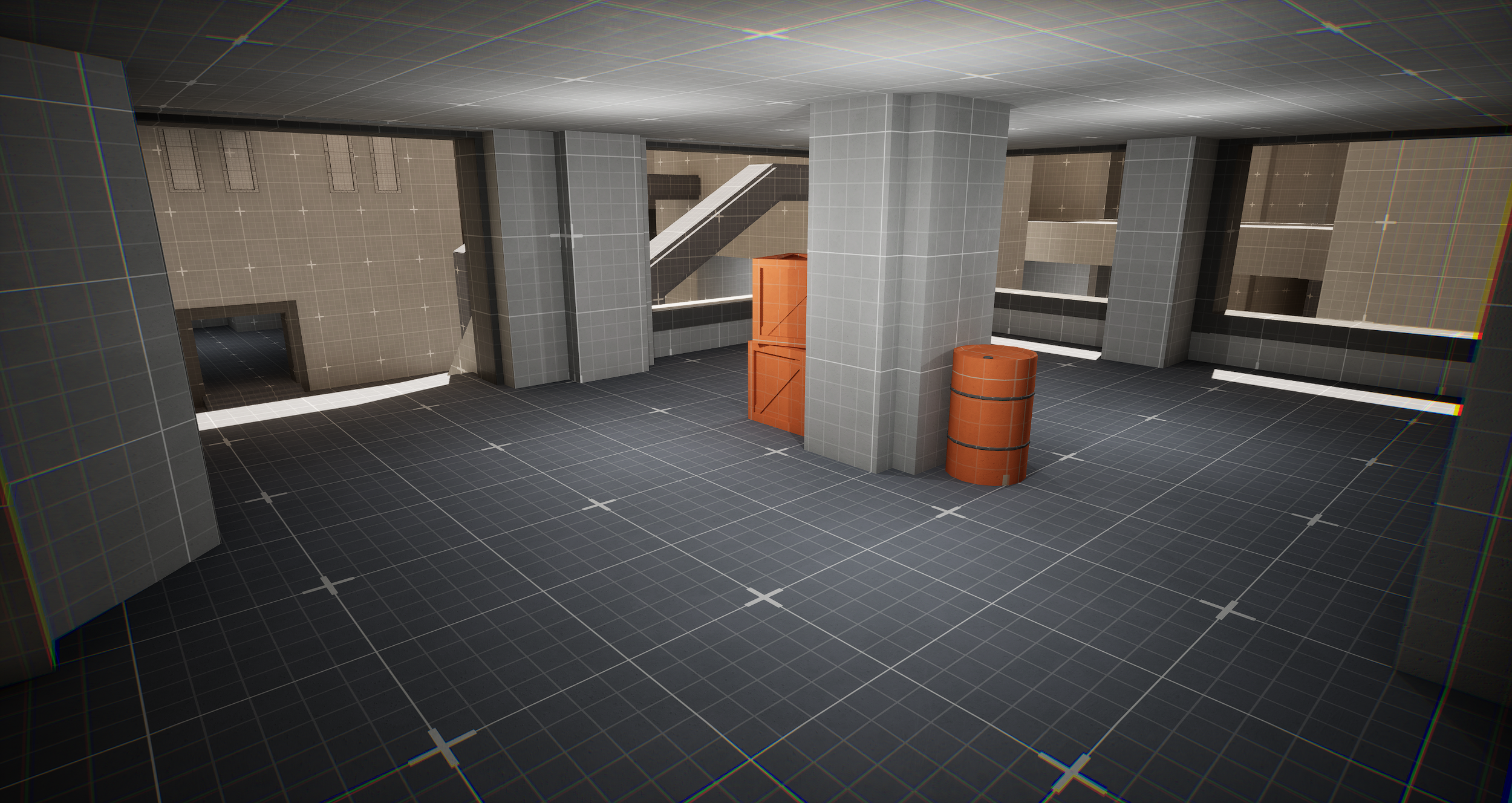
B Tower
Design and Balance
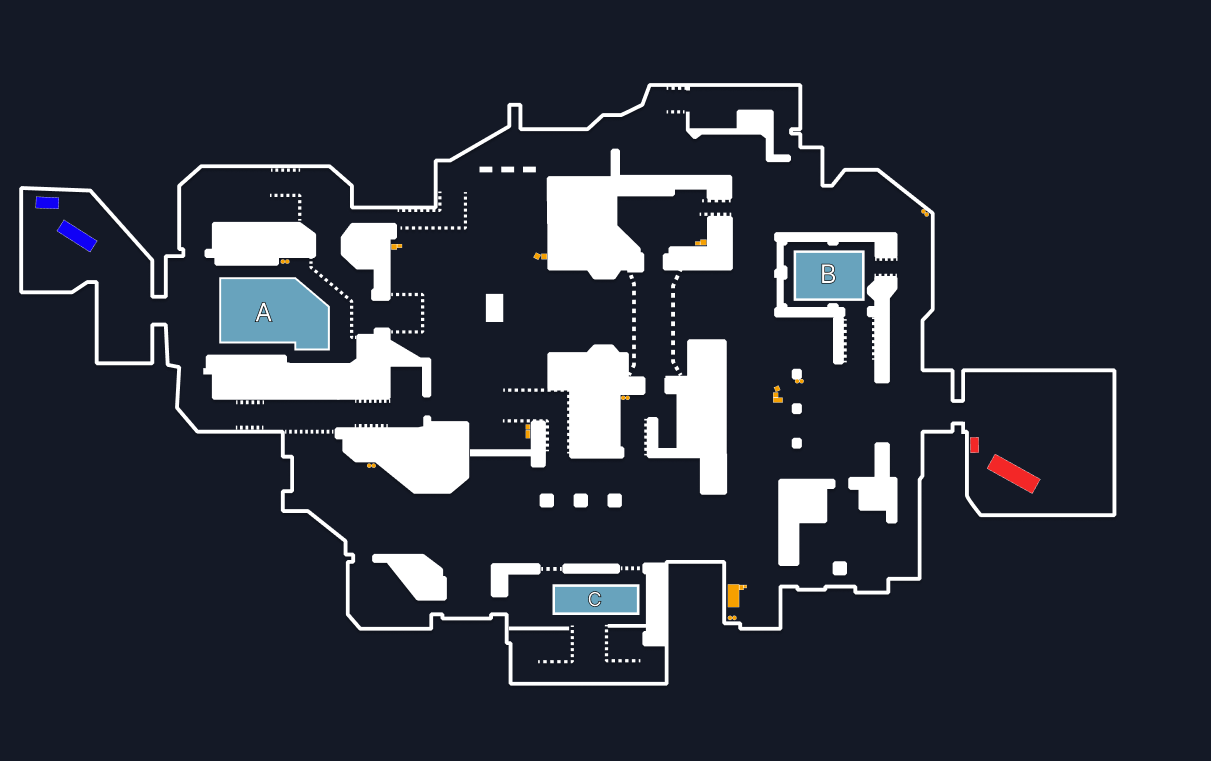
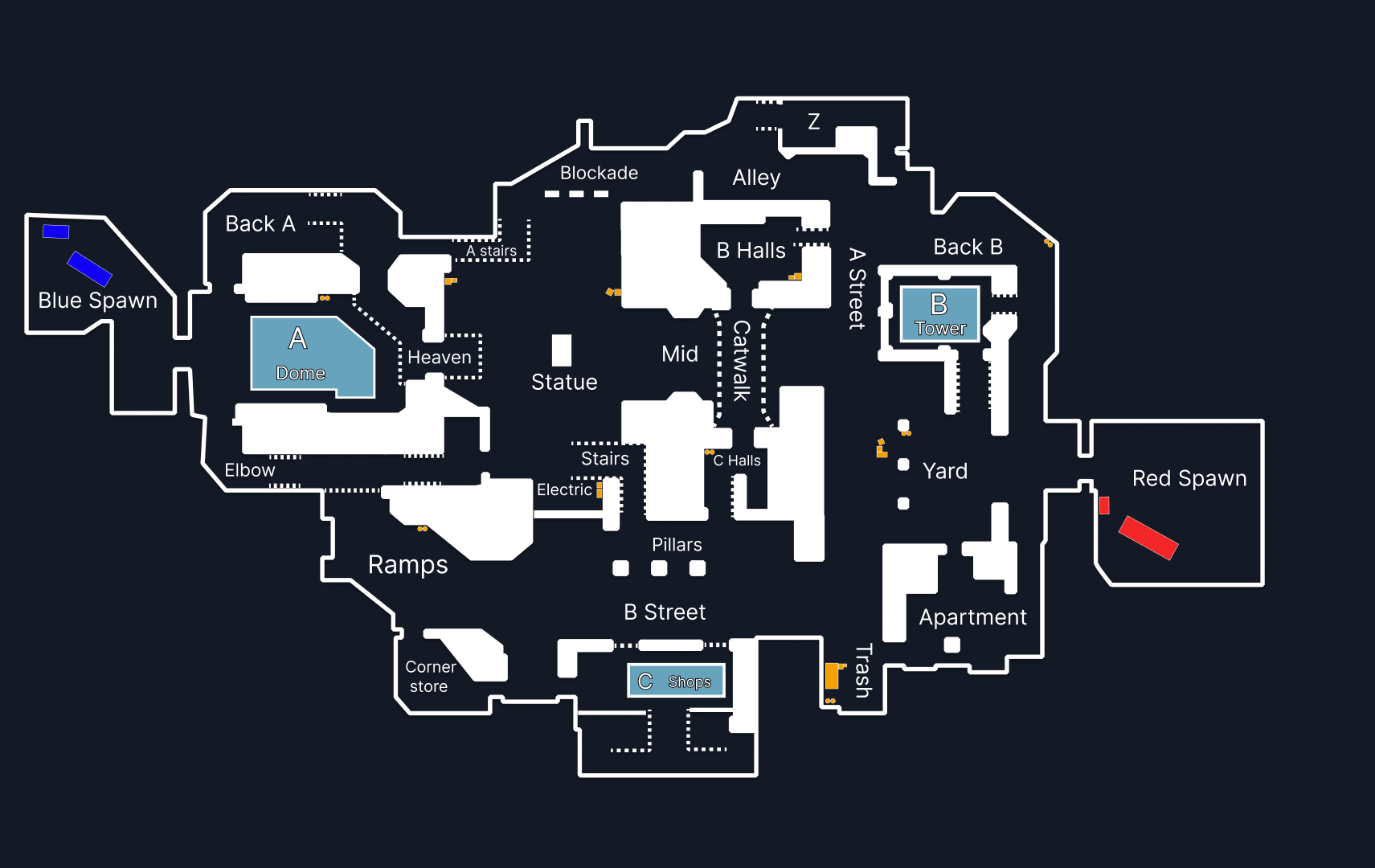
This map is designed using a three lane system, a common approach in games such as Call of Duty and Counter-Strike maps.
It includes multiple routes leading across the map, with a central area that encourages player encounters and control. This layout creates clear structure while still allowing flexible movement and different strategies.
Three-lane layout
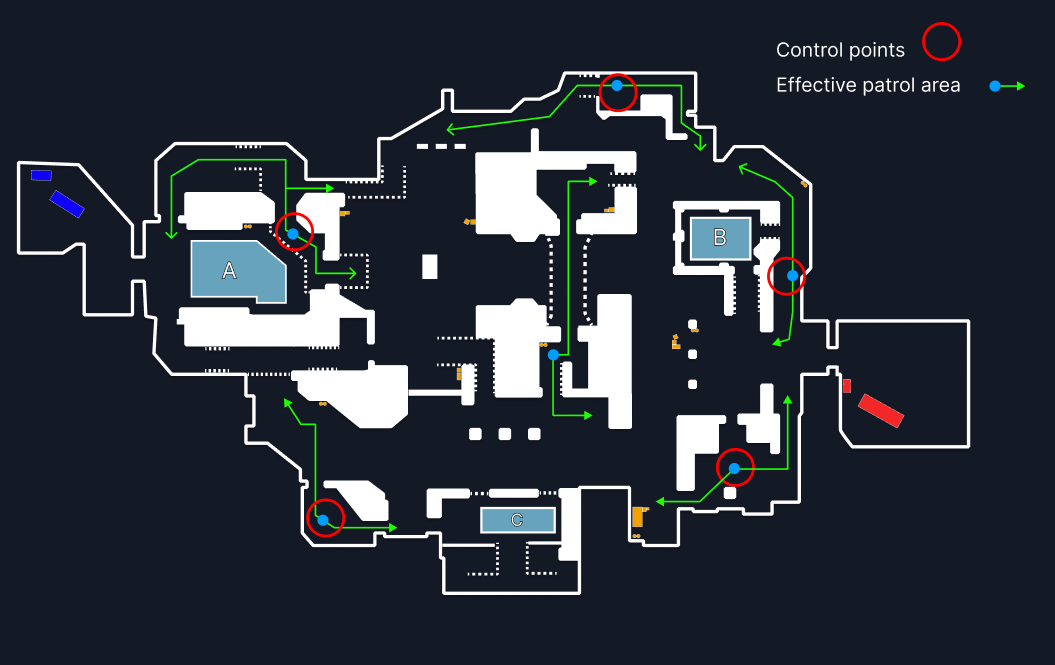
Control points highlight the most important areas of the map. The marked circles show positions that offer strong influence, with a good balance of cover and positional advantage to support both defense and offense.
Control Points
Production
Blockout
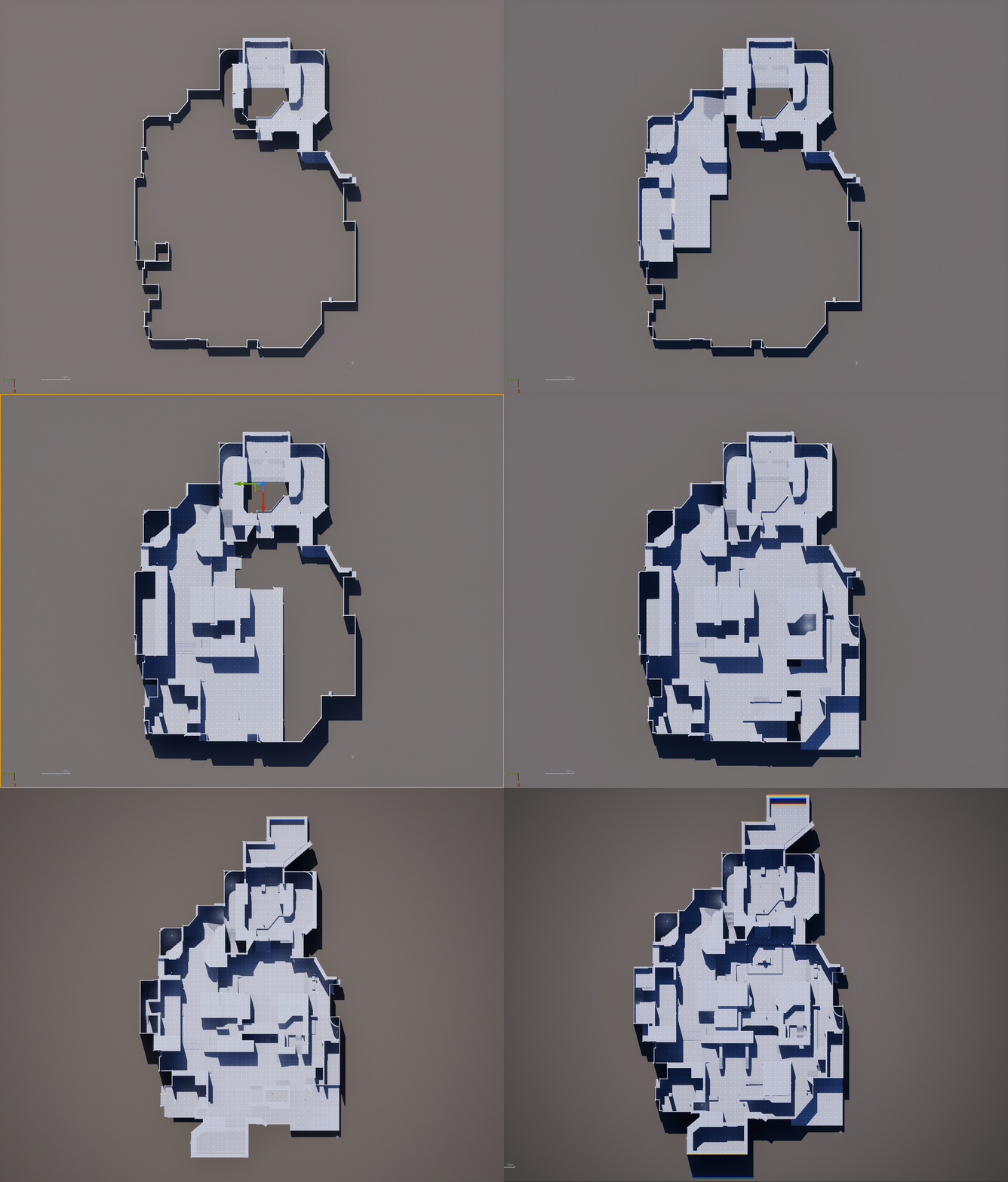
During the blockout phase, I focus on iterating my design, since it’s the easiest time to experiment and make changes. Although I try to refine ideas early, I’m always open to larger adjustments later in the process, as the blockout GIFs show.
Gathering references
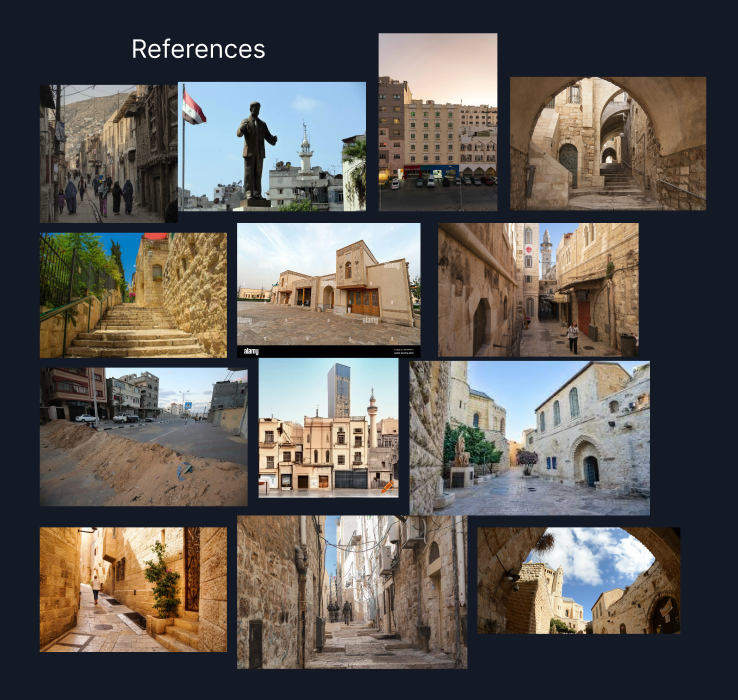
I began by selecting a theme and found inspiration in Jerusalem, Israel’s capital. Its dusty, bright walls make for great readability, while the mix of building heights and vertical spaces adds depth and variety to the environment.
reflections
If I were to do this project again, I would make the map a bit bigger and more open. This would give more variety to the gameplay and make long-range weapons like snipers more useful. I would also try adding more interactive elements so players could engage with the environment.
This has been the most fun and challenging level design project I’ve worked on. Since I love competitive FPS games, I learned a lot about spacing, flow, and how to make levels enjoyable to play. I’m proud of what I created and learned a lot from the process.
I wanted the game to feel responsive and intuitive, so I spent time refining movement and pacing. Several ideas had to be changed or removed when they didn’t improve gameplay. Testing helped me understand what actually worked for the player, not just what I thought would work.
Thank you for reading!